You want to learn AI. You’re interested. You’re ready.
But then you see job postings. “Computer science background required.” “Programming experience necessary.” And you think: “That’s not me.”
So you don’t apply. You don’t enroll. You tell yourself the door is closed before you even knock.
I need you to hear this: The technical background requirement isn’t your barrier. Self-doubt is.
And here’s the good news: you can fix that.
The Myth Everyone Believes (But It’s Wrong)
There’s a pervasive belief in tech that you need to be a “technical person” to work with AI. You need to know how to code. You need a CS degree. You need to be naturally gifted with computers.
This is false.
Here’s what’s actually true:
-
Some AI work requires coding: If you want to build and train machine learning models from scratch, yes, you’ll need programming skills eventually.
-
Much AI work doesn’t require coding: Using AI tools, analyzing data, designing AI solutions, implementing AI strategies. These don’t require you to know how to code. In fact, over 43% of tech company roles are completely non-technical.
-
Coding is learnable: If you want to code, you can learn it. It’s a skill, not a talent you’re born with.
-
Non-technical backgrounds are valuable: Many of the best AI strategists, product managers, and analysts come from non-technical backgrounds. They understand business, psychology, communication. These skills matter as much (or more) than technical depth.
The AI field doesn’t just need technical people. It needs people with diverse backgrounds. Business people. Marketing people. Writers. Project managers. Customer service experts. Teachers. All of these perspectives make AI teams better.
But here’s what actually stops non-technical people from breaking into AI:
The Real Barrier: Self-Doubt (And Why It’s Lying to You)
You look at the AI field. Technical jargon everywhere. People with CS degrees talking about algorithms. Neural networks. You think: “I don’t belong here.”
That feeling isn’t real. It’s just self-doubt.
Here’s what I’ve actually observed: Self-doubt is the only barrier that stops people. Not technical background. Not education. Not age.
Just self-doubt.
And you know what? 58% of tech employees experience imposter syndrome. Even the ones with CS degrees. Even the experienced ones. That feeling you have right now? Everyone has it. Everyone.
Everyone starting in a new field feels this way. Every single person. The technical people felt it when they started. The people with CS degrees felt it. The feeling is universal and it’s not a reliable indicator of your capability.
Here’s the uncomfortable truth: Your imposter syndrome is lying to you.
The story you’re telling yourself (“I’m not technical, so I can’t do this”) is a story, not a fact. It feels true, but it’s not. Feeling like an imposter is actually a common trait of successful people breaking into new fields.
What separates people who break into AI from people who don’t isn’t technical background. It’s whether they choose to believe the self-doubt story or not.
What Non-Technical People Actually Do in AI
Let me be specific about what’s open to you:
AI Strategy & Consulting Help organizations figure out where AI can solve real problems. This requires business thinking, problem-solving, and strategic analysis. No coding needed.
Data Analysis & Business Intelligence Analyze data to answer business questions and generate insights. You’ll use tools (like AI platforms) to do analysis, but you don’t need to build these tools yourself.
AI Product Management Manage AI products and features. This requires understanding user needs, business goals, and product strategy. Writing code is optional.
AI Implementation & Deployment Help organizations implement AI solutions successfully. This is about change management, strategy, and execution. No code required.
AI Training & Education Teach others about AI. Understanding concepts and being able to explain them is more important than being able to build them from scratch.
Customer Success (AI Companies) Support customers using AI tools. Your customer service and communication skills are exactly what’s needed.
Content & Communication Write about AI, create educational content, communicate technical concepts to non-technical audiences. This is desperately needed.
For Educators Specifically: If you’re a teacher considering this path, know this: Your teaching expertise + AI fundamentals = valuable. You could teach AI to students, build an AI curriculum, train other teachers. The education sector is hungry for educators who understand both teaching and AI.
All of these paths are open to you. You just need to develop the right skills. None of them require a technical background to start.
The Skills That Actually Determine Success
Look, if you’re thinking about breaking into AI, you need to know what actually matters.
And it’s not what you think.
Problem-Solving. Can you look at a messy situation and figure out what’s actually wrong? Can you ask the right questions instead of just taking the first answer you get? I’m talking about real thinking here. Analyzing information, connecting dots, trying solutions. That’s all problem-solving. And yeah, it has nothing to do with whether you took computer science in high school.
Learning Agility. This is the big one. Can you learn a new tool quickly? Can you read documentation and figure it out without someone holding your hand? Can you adapt when things change? Because honestly, AI tools change every week. If you can learn new things fast, you can learn anything. Let that sink in. Not your test scores. Not your degree. Your ability to learn.
Communication. Here’s what nobody talks about: the best engineer who can’t explain their work is worth less than a decent communicator who understands the concepts. In AI, you need to explain what you’re doing to people who don’t code. To business people. To customers. To your team. If you can do that, you’re ahead.
Business Thinking. Real talk: non-technical people often understand business better than engineers do. You know how companies work. You understand money and outcomes. You think about impact. That’s valuable.
Curiosity. Are you actually interested in how things work? Do you ask questions? Do you dive deep into topics that interest you? Because this matters more than your background ever will. Curious people learn constantly. They stay current. They figure things out.
Work Ethic. Can you commit to something hard? Can you push through when it’s difficult? Everyone breaking into a new field needs this. Period.
Here’s the thing: all of these skills are independent of your technical background. A person with zero coding experience who has these six skills will outpace someone with a CS degree who doesn’t. Every single time.
Why Your Non-Technical Background Is Actually an Advantage
Here’s what I tell non-technical people entering AI:
You understand non-technical people: If you’re implementing AI solutions in an organization, you need to communicate with business stakeholders, salespeople, customer service reps. People without technical backgrounds. You speak their language naturally. You don’t have to translate your thinking.
You ask different questions: Technical people sometimes get trapped in technical thinking. You might ask a business question that opens up a completely new perspective.
You bring domain expertise: Maybe you worked in marketing, sales, customer service, education, or another field. That domain expertise is valuable. It gives you context about real business problems.
You’re not constrained by “that’s how tech works”: Sometimes the most innovative solutions come from people who don’t know the “standard” way and approach a problem differently.
You focus on outcomes: Non-technical people tend to focus on business outcomes. Does this actually solve a real problem? Does it improve customer experience? This is the right focus.
Some of the most impactful people in AI didn’t start with a technical background. Studies on career transitions show that non-traditional backgrounds actually lead to innovation and problem-solving advantages. They brought a different perspective and that made all the difference.
Your Path Into AI (Starting Today)
Real quick. I want to tell you about Sarah. She was 21. Marketing major. No coding experience. No CS background. She was terrified. Thought she was “too late” and “not smart enough.” She asked herself the same questions you’re probably asking right now.
She started small. One workshop. A little online course. Hands-on stuff, not theory. Within six months? She had her first AI implementation project. Now she’s working at a company helping them integrate AI into their operations. She makes good money. She’s confident.
She’s not special. She didn’t have some magic background. She just started.
If you want to do what Sarah did, here’s how:
Step 1: Choose Your Focus What aspect of AI interests you? Strategy? Data analysis? AI tools? Implementation? Teaching? Pick something. Not forever. Just something to start with that aligns with what you actually care about.
Step 2: Learn the Fundamentals Learn what AI actually is, what problems it solves, what different types of AI do. This conceptual understanding is your foundation.
Step 3: Get Hands-On Use actual AI tools. Try ChatGPT. Use data analysis platforms. Experiment. Get comfortable with the tools you’ll work with in real jobs.
Step 4: Build Projects Apply what you’re learning to real (or realistic) problems. This is where learning actually sticks. This is what employers want to see.
Step 5: Get Certified (If Relevant) If certification helps in your chosen path, pursue it. It’s a credential that shows you’ve studied the material and met standards.
Step 6: Keep Learning The AI field changes constantly. Plan to keep learning throughout your career.
You Absolutely Can Do This
Real talk: If you’re interested in AI, your non-technical background isn’t a barrier.
It might feel like one. You might look at people ahead of you and think they have something you’re missing.
They don’t.
What they have is experience. And you can get that.
You already have the foundation:
- The ability to learn
- Curiosity about how things work
- The drive to grow
- A perspective nobody else has
- Problem-solving ability
That’s it. Everything else? Learnable.
Here’s what actually stops people: Self-doubt makes them think the door is locked. So they never even try.
Don’t be that person.
Start small. Learn the fundamentals. Get hands-on. Build something. Stay curious. Push through the hard parts. Remember that your background isn’t a weakness. It’s your advantage.
Your path into AI isn’t about becoming a coder. It’s about becoming someone who solves problems using AI in a way nobody else can.
Because that’s what you bring. That’s what matters.
That’s valuable. That’s needed. That’s absolutely possible.
Ready to actually start? I’m launching the AI Training Youth course in early 2026. Hands-on, practical, built for people like you. No CS degree required. Just people ready to break through the self-doubt and actually learn.
Stay Updated
Get weekly AI insights and updates delivered to your inbox

Clifton T. Canady
WordPress Developer • AI Trainer • Content Strategist • Speaker
I help entrepreneurs and businesses build powerful digital presences through custom WordPress development, AI-driven content strategy, and engaging presentations. With 10+ years of experience, I blend technical expertise with StoryBrand messaging to create solutions that actually move the needle.
Related Articles
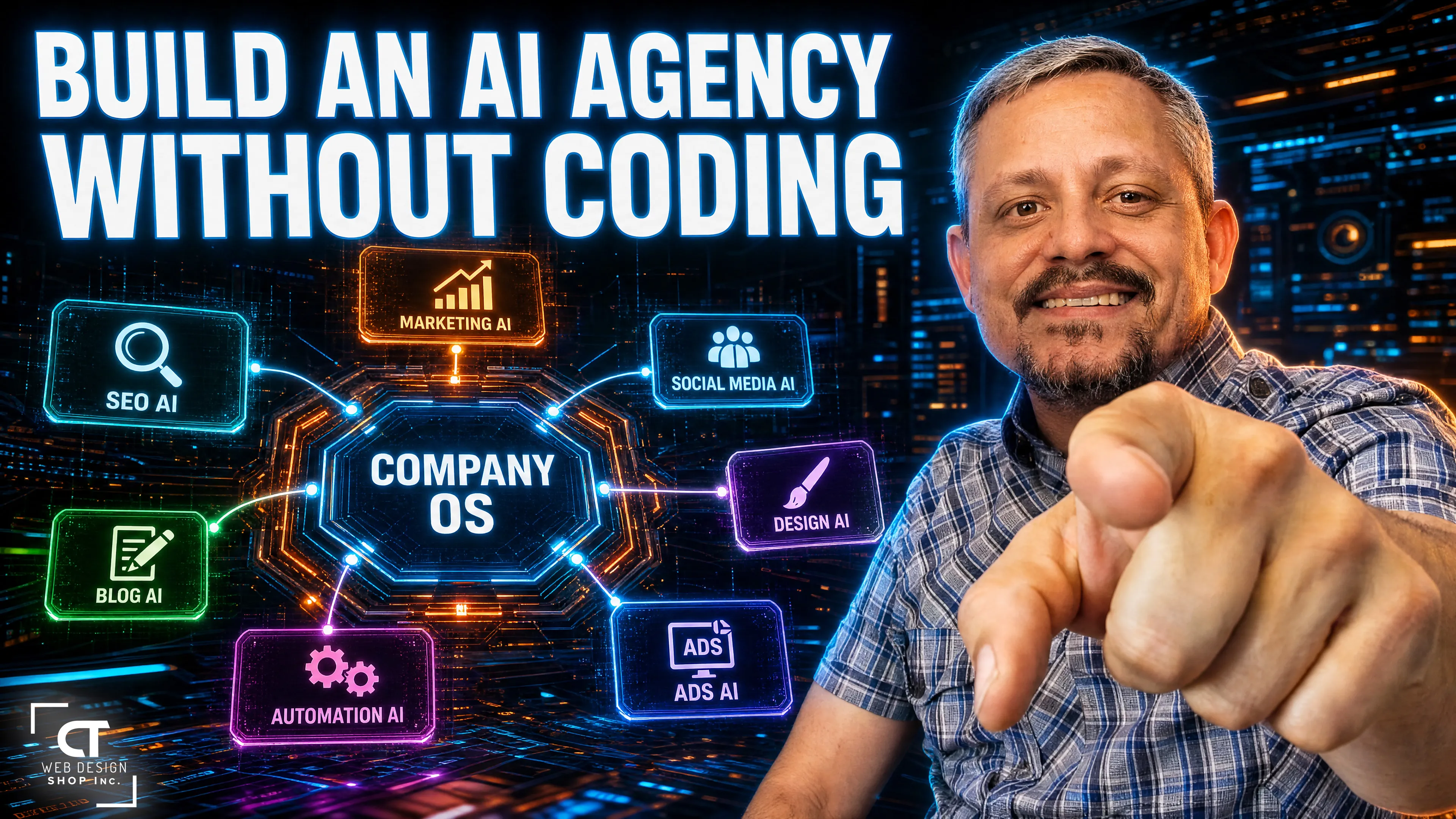
Claude Code Skills: How I Built an AI Company OS
I turned Claude Code skills into an 8-department, 40-agent AI Company OS that runs CT Web Design Shop daily. See the install script and org chart I actually use.

Portfolio-Focused AI Training Gets You Hired Faster Than Bootcamps
Portfolio-focused AI training gets you hired faster. Compare bootcamps vs. online learning. See why portfolio training produces better outcomes—backed by 2025 data.

AI as a Business Tool, Not a Dependency: Building Sustainable AI Strategy
Learn how to use AI as a strategic business tool without creating dependency. The Teach and Build method aligns AI implementation with real business goals.