The AI hype is deafening. Every week, another tool promises to revolutionize your business. ChatGPT for this, Claude for that, some new platform claiming it will replace your entire team. The noise is so loud that many business owners I talk to either dismiss AI entirely or jump from one tool to the next, burning money without seeing results.
Here’s what I’ve learned working with growth-stage businesses for over 20 years: the problem isn’t AI. The problem is strategy.
According to recent research, 95% of generative AI pilots at companies are failing, and 84% of all AI projects fail, but not because of the technology. The failure is organizational. This isn’t about tools. It’s about strategy and how you deploy them.
The AI Trap: Tools Without Direction
Let me paint a picture. Sarah runs a service-based business doing $2M in annual revenue. She’s hitting a growth plateau: revenue is flat, her team is working overtime, and she knows something has to change. Then she reads that AI could save her business.
So she buys ChatGPT Plus, subscribes to three AI content tools, and attempts to automate her copywriting. After a month, the results are mediocre. The content doesn’t match her voice. The AI-generated copy feels generic. She’s spent $50/month on tools and gained nothing.
Sarah’s mistake wasn’t believing in AI. Her mistake was treating AI as a magic solution instead of a strategic tool.
And honestly? This is everywhere. Business owners throw money at tools without understanding why, without connecting it to an actual outcome, and without building any actual skill with it. They’re just hoping the tool magically does the thinking for them.
Spoiler alert (again): It doesn’t.
The result? Wasted budget. Frustrated teams. Another failed experiment instead of competitive advantage. And a bunch of untouched software licenses gathering dust.
And here’s the thing. I used to be Sarah. Seriously. I’d see a shiny new tool and think, “This is it. This changes everything!” I once dropped $500 on a “revolutionary” WordPress automation plugin. Never used it. Still have the license sitting in my account like a digital graveyard. Spoiler alert: it rarely worked out. I wasted hours, money, and mental energy chasing trends before I finally figured out what actually matters. After two decades building WordPress sites and watching what actually moves the needle, I distilled it down to ONE question: Does it solve a real business problem? That’s it. That’s the whole thing. Everything else is noise.
Here’s what nobody tells you: Sarah had the right instinct. Something needed to change. She just lacked the strategic framework to deploy AI effectively. And that’s fixable.
Why “AI Dependency” Is the Real Risk
Here’s the flip side. And it’s just as dangerous.
Some businesses go the opposite direction. They outsource their entire brain to AI. Content? AI. Strategy? AI. Decision-making? You guessed it. AI. They build their whole operation on outputs they don’t understand from a system that has no idea what their business actually needs.
Then something breaks. AI hallucinates wrong information. The industry shifts. A customer calls and asks a question the AI-generated playbook doesn’t cover. And suddenly they’re stranded with no idea how to actually think about their business anymore.
Organizations aren’t ready for the risks of agentic AI, and the consequences are real. You’re outsourcing your thinking to a machine that doesn’t understand your customers, your relationships, or what actually makes your business tick.
I’ve seen it. Businesses publishing AI-generated content riddled with errors because nobody actually read it. Marketing campaigns built on AI recommendations that completely contradicted their brand. Founders making major decisions based on AI analysis they didn’t understand and couldn’t defend when things went sideways.
Here’s what kills me: The businesses that suffer most from AI failures aren’t the ones that reject AI. They’re the ones that blindly worship it.
What really irritates me? Watching smart, capable founders apologize for not understanding AI. “I’m sorry, I’m not technical enough.” Stop. That’s not the problem. The problem is that vendors have convinced you that you should be technical. You shouldn’t. You should be strategic. There’s a massive difference.
So here’s my non-negotiable belief: Don’t use AI as your brain. Use it as a tool. Full stop.
You don’t need to be an AI expert. But if you’re building your business strategy around AI, you absolutely need to understand what you’re doing and why. No exceptions.
The Strategic Framework: Three Layers of AI Implementation
Here’s the framework I developed after watching dozens of businesses waste money on AI tools they didn’t understand. What I call the Teach and Build Method™ for AI strategy. It’s built on a simple principle: understanding comes before implementation, and implementation comes before scaling.
Quick Navigation: If you’re already using AI and want to improve, jump to Layer 2. If you’re deciding whether AI fits your business, start with Layer 1.
Layer 1: Understand the Concept
Before you deploy any AI tool, understand what problem it actually solves and how it solves that problem.
Stop asking “what AI tools are hot right now?” Start asking this instead: “What specific business problem am I trying to solve?”
For a marketing director drowning in content production, the problem might be: “I need to produce more high-quality content in less time without hiring more writers.”
For an e-commerce founder, it might be: “My conversion rate is plateauing because my personalization isn’t strong enough.” (And right now you’re probably thinking: “But I don’t have time to learn AI AND fix conversion rates.” Fair point. That’s exactly why strategy comes first.)
For a small business owner running a service business, it might be: “I’m spending 10 hours a week on administrative tasks. Client follow-ups, email management, scheduling. That pulls me away from actually serving clients and generating leads.” (I know what you’re thinking: “That sounds nice in theory, but I barely have time to breathe.” I hear that constantly. But here’s the thing. You have time for this. You just don’t know it yet.)
Here’s the critical part. Once you understand the problem, you can actually evaluate whether AI helps solve it. Sometimes it does. Sometimes the answer is better project management, better hiring, or honestly a different business strategy altogether. The point? Let business problems drive technology decisions, not the other way around. That’s the difference between strategic thinking and just buying tools.
Layer 2: Build With the Tool (With Guidance)
Once you understand the problem and you’ve decided AI is the solution, the next step is learning how to use the tool strategically.
This isn’t passive. You’re not just handing work to AI and hoping it turns out okay. You’re actively learning how to guide the AI toward outputs that actually work for your specific situation.
If you’re using AI for content creation, you’re learning how to write prompts that capture your voice, your positioning, and your strategic approach. You’re reviewing the output. You’re iterating. You’re building context over time about what works and what doesn’t in your specific business.
This is where most people completely miss the mark. They ask ChatGPT to write their homepage copy, don’t like it, and conclude “AI doesn’t work for me.” They never try a second prompt. They never learn how to guide it. They give up.
Here’s what actually works: AI tools respond to guidance. Better prompts equal better output. Strategic thinking plus AI equals powerful results.
That learning phase. It’s not optional. It’s the difference between using a tool and being used by a tool. And if I can figure this out, anyone can!
Layer 3: Implement Into Business Strategy
Only once you understand the concept and have built some competency with the tool do you implement it into your actual business processes.
This is where you might automate content research, streamline copywriting, or use AI to analyze your business data. But you’re doing it from a position of knowledge, not blind faith.
You know what the AI is doing. You know when to trust it and when to override it. You know how it fits into your broader business strategy. You can measure impact. You can adjust course if needed.
This is sustainable AI strategy.
Real-World Examples: How This Framework Works in Practice
Example 1: WordPress & Technical Documentation
Let me walk you through a concrete example from my own business because I didn’t just dream this up. I built it the hard way.
I work with WordPress clients who need custom solutions. Used to be, my biggest bottleneck was documentation. I’d build something beautiful and powerful, but then I’d spend hours explaining it to clients. Creating user guides. Answering the same questions over and over. It was eating my time.
I could have hired someone to do it, but here’s the honest truth: I understand those solutions better than anyone else. Training someone would take time, cost money, and create quality issues. So I was stuck.
Then I thought of something. What if I could use AI to speed this up without losing my fingerprint on the quality?
Here’s exactly what I did, using the Teach and Build method:
Layer 1 - Understand: My problem wasn’t really documentation. My problem was creating documentation that matched my voice and technical depth in less time. That was the goal.
Layer 2 - Build: I spent a solid week learning how to guide AI to create documentation that sounded like me. I wrote templates. Created examples. Iterated on prompts. Failed a bunch of times. Learned what worked and what didn’t.
Layer 3 - Implement: Now, for each client project, I use AI to create the initial documentation draft, I review it for accuracy and voice, I edit what needs editing, and I deliver something better than I could have created manually in the same timeframe.
The result? Happier clients because they get better docs. Faster delivery. And here’s the key: more time for me to do the higher-value work that only I can do (strategic consulting, custom development, thinking through hard problems).
I’m not dependent on AI to do this. I understand every step of the process. I could do it all manually if I had to. But I’ve strategically chosen to amplify my capability with a tool. That’s the difference between tool dependency and tool mastery.
Example 2: Small Business Administration (The Real-World Challenge)
Now here’s something closer to your actual life (if you’re running a small business).
Meet Marcus. He runs a consulting business with 5 employees, and he’s doing everything. He’s the business owner, salesperson, project manager, and reluctantly, the administrative assistant. Scheduling calls. Managing email follow-ups. Organizing notes. Tracking who owes what. The works.
He’s burning 12-15 hours per week on admin work. That’s time he could spend generating leads, actually serving clients, or you know, sleeping.
Here’s how Marcus applied the Teach and Build method (and got his life back):
Layer 1 - Understand: His problem wasn’t “I need more tools.” His problem was: “I need to blow through administrative work 10x faster without becoming a robot or losing the personal touch with clients.”
Layer 2 - Build: Marcus spent two weeks experimenting. He tried ChatGPT and Claude. He learned:
- How to draft client follow-up emails that didn’t sound like a bot wrote them
- How to turn meeting notes into actual action items in seconds
- How to create project status summaries from his scattered chaos
- How to generate proposal drafts that actually matched his style
Spoiler alert: His first attempts were rough. AI-generated emails read like they were written by a corporate alien. But then he started adding context about his voice, his approach, his values. The AI learned. His prompts got sharper. It started working.
Layer 3 - Implement: Now Marcus uses AI as his first pass on 80% of admin work. He spends 30 minutes personalizing and refining. Before? That was a 3-hour slog. He just freed up 8 hours per week.
The result? Those 8 hours translated to 5-7 new leads per week. Two of those convert. His revenue went up. He stopped wanting to pull his hair out on Tuesday mornings.
And here’s the key: He’s not dependent on AI. He reviews everything. He owns the relationships. He just decided to use a tool to amplify his capacity instead of grinding himself into dust.
That’s the Teach and Build method.
How to Avoid the Traps
I’ve watched dozens of AI implementations crash and burn. Same mistakes. Every. Single. Time. Avoid these five, and you’re already winning.
Trap 1: Tool-First Thinking Stop asking “what AI tools should we use?” Start asking “what’s actually slowing us down right now?” Then evaluate if AI solves it. Organizations that lead with technology instead of business problems fail at higher rates. Full stop. Let your business problem drive the decision, not the shiny new tool.
Trap 2: Set-and-Forget Automation Don’t automate something you don’t understand. This is how you publish content that’s completely wrong, make decisions based on bad data, and look like you don’t know your own business. Your customers are paying attention. Don’t give them a reason to leave.
Trap 3: All-or-Nothing Adoption Don’t go full extremes. Either dismissing AI entirely OR building your entire operation on top of it. The sweet spot? Strategic, surgical adoption. Use it where it matters. Skip it where it doesn’t. Simple.
Trap 4: Skipping the Learning Phase This is the big one. Don’t expect your team (or yourself) to use AI effectively without actually learning how. Sure, buy tools. But invest in training. That’s where the actual value happens. Research is crystal clear on this. Learning and capability building are the difference between success and failure. There’s no way around it.
Full transparency: I still fall into this trap sometimes. When a new AI tool launches, I get excited and want to jump in without learning it properly. I catch myself. “Slow down, Clifton. Understand first.” It’s an ongoing practice, not something I’ve mastered. The difference is now I know it’s a trap, and I course-correct faster.
Trap 5: Ignoring Ethics and Transparency If you’re using AI for customer-facing work (content, recommendations, analysis). Tell people. They deserve to know. AI ethics is becoming a real competitive advantage, not just a nice-to-have. Your customers will respect you more for being honest about it.
The Real Opportunity: Sustainable AI Advantage
Here’s what I actually believe: the businesses that win in the next 5 years won’t be the ones with access to the most cutting-edge AI. They’ll be the ones using AI strategically with clear business outcomes, with teams that actually understand how it works, and with systems that deliver measurable results.
The competitive advantage isn’t the tool. It’s the strategy.
A business owner who understands how to use AI as a leverage tool to solve real problems will demolish someone with access to every fancy AI platform on earth but zero strategic framework.
Your expertise is your superpower. AI is just the amplifier.
Building sustainable AI strategy means:
- Understanding what problems you’re actually trying to solve and which ones AI can actually help with
- Learning how to use tools effectively instead of just buying the next shiny thing
- Implementing strategically instead of automating blindly
- Building team competency and independence instead of creating dependency on you or a tool
- Measuring real business outcomes instead of vanity metrics that look good in spreadsheets
Your Next Step
If you’re serious about leveraging AI as a competitive advantage and not just jumping on the hype train, here’s exactly what to do:
Step 1: Audit your biggest business bottleneck. Not the most glamorous problem. The real bottleneck. What’s slowing you down right now? What’s expensive to do? What takes your smartest people away from strategic work?
Step 2: Research whether AI actually solves that specific problem. Don’t ask “is there an AI tool for this?” Ask instead: “Does AI actually move the needle on THIS specific bottleneck?” Be ruthless in your evaluation.
Step 3: If yes, invest in real learning. Not buying. Learning. Spend a week learning how to use a tool properly. Experiment. Iterate. Fail. Build actual competency.
Step 4: Implement strategically. Once you understand the tool, integrate it into your processes in a way that creates real business value, not just automation for automation’s sake.
Step 5: Measure and refine. Track the actual impact. Does this move your business metrics? If yes, build on it. If no, adjust or try something else. Stay flexible.
This is the Teach and Build method in action. It’s not flashy. It’s not trendy. It’s strategic thinking applied to AI.
Ready to Build Your Sustainable AI Strategy?
Here’s the bottom line: Your business doesn’t need the latest AI platform. It needs a framework. A real, strategic framework for deploying AI to solve actual problems and break through growth barriers. That’s where competitive advantage lives.
For Growth-Stage Business Owners:
If you’re running a 10-100 person operation and hitting that frustrating growth plateau, you need strategic transformation. You need a framework that actually connects AI to your specific bottlenecks. Not some generic “AI tips” article.
Dive into the AI Training Course to learn the exact Teach and Build frameworks I use with real clients. These frameworks transform how you think about AI and drive $15K-$50K+ in measurable business impact.
Or, join the live experience:
Come to the AI Boardroom Workshop ($49 early-bird pricing). This is where we walk through the Teach and Build method in real time, with real business applications and peer learning from other growth-stage business owners who actually get it. No fluff. No theory. Just strategy that works.
For Small Business Owners:
You’re wearing five hats. You barely have time to think strategically, let alone implement. Start small. Focus on the quick wins.
Check out our free AI strategy resources. Find your ONE biggest admin bottleneck and learn the Teach and Build method to reclaim 8-10 hours per week. No expensive courses. No jargon. Just practical frameworks built for people who are actually doing the work.
You’re already the expert. You don’t need me to tell you that. You need me to show you how to be seen as one and how to leverage AI to amplify your expertise without creating another dependency.
Let’s go.
Stay Updated
Get weekly AI insights and updates delivered to your inbox

Clifton T. Canady
WordPress Developer • AI Trainer • Content Strategist • Speaker
I help entrepreneurs and businesses build powerful digital presences through custom WordPress development, AI-driven content strategy, and engaging presentations. With 10+ years of experience, I blend technical expertise with StoryBrand messaging to create solutions that actually move the needle.
Related Articles
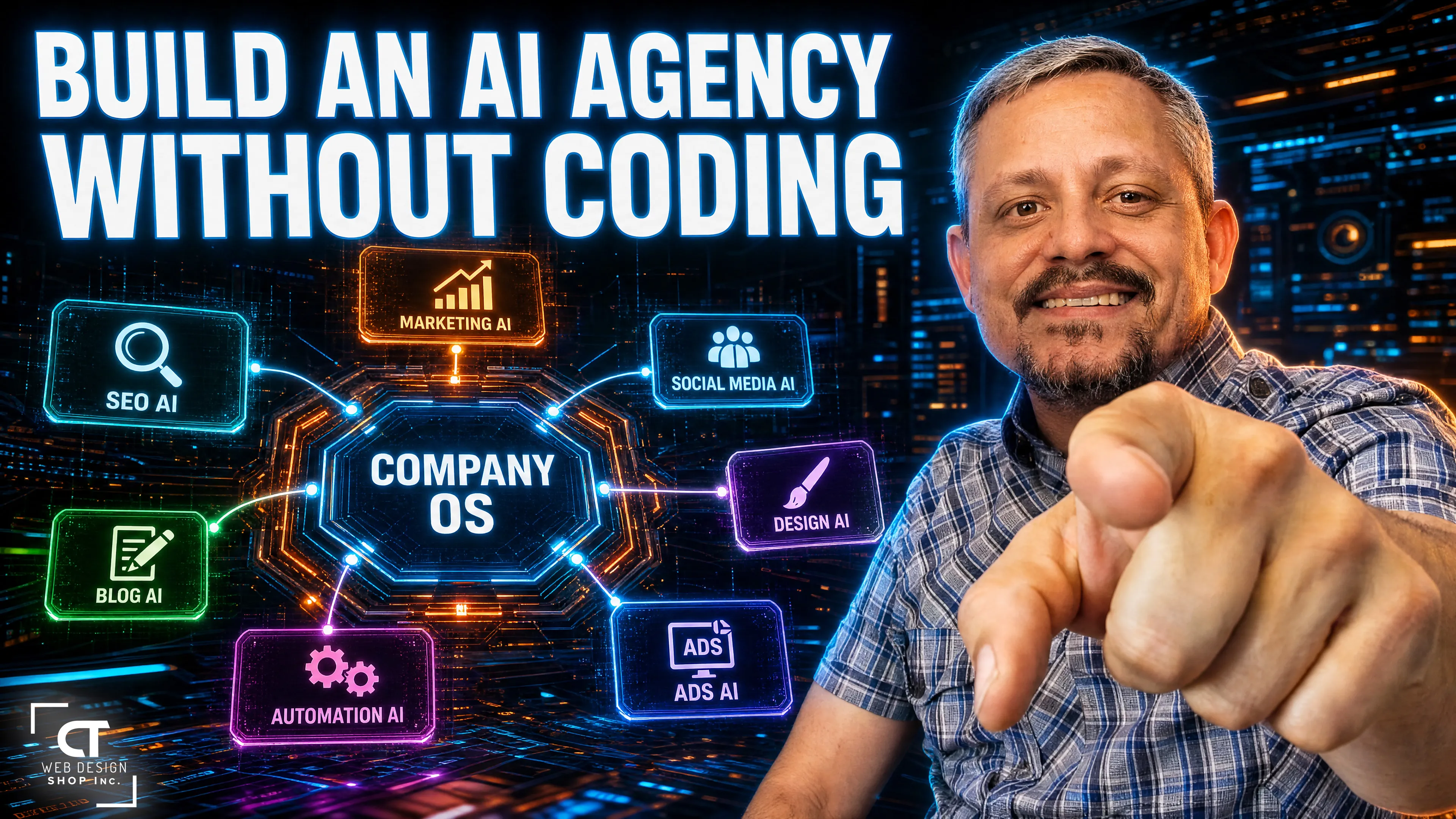
Claude Code Skills: How I Built an AI Company OS
I turned Claude Code skills into an 8-department, 40-agent AI Company OS that runs CT Web Design Shop daily. See the install script and org chart I actually use.

Portfolio-Focused AI Training Gets You Hired Faster Than Bootcamps
Portfolio-focused AI training gets you hired faster. Compare bootcamps vs. online learning. See why portfolio training produces better outcomes—backed by 2025 data.

The Real Barrier to Breaking Into AI (And It's Not Your Non-Technical Background)
You don't have a technical background? That's not your barrier. Here's what actually stops non-technical people from breaking into AI—and how to overcome it.